Journal · Issue 001 · Founding Issue · June 2026
The Founding Issue, in full.
Calibrate Careers publishes one briefing each month for senior hospitality professionals. This is the first. Future issues are sent privately to subscribers.
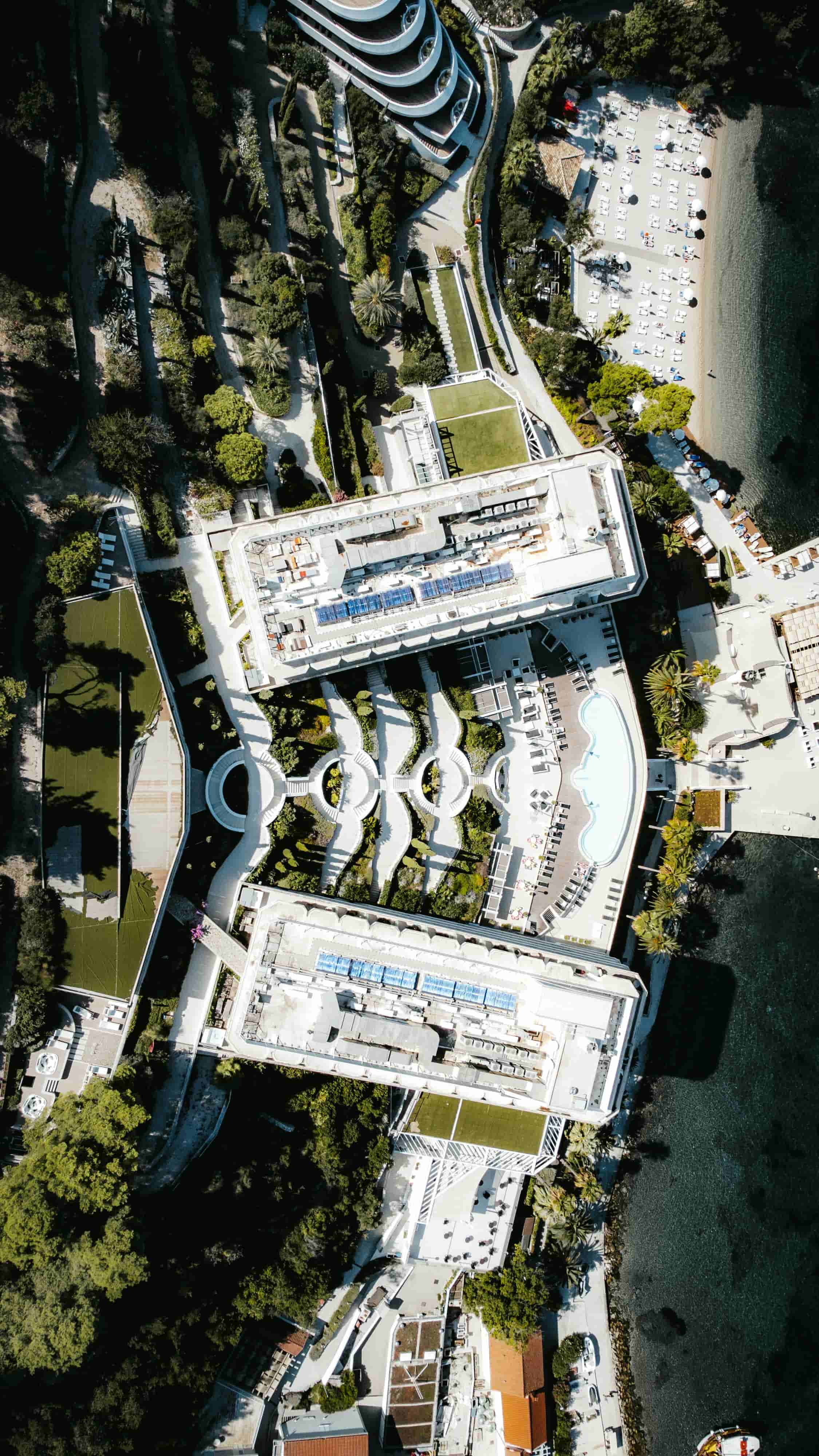
The Founding Issue, published June 2026, established the thesis that every briefing since has built on. Two of the largest hotel operators in the world independently disclosed the same finding in the first quarter of 2026: luxury is structurally outperforming the rest of the industry. The issue is reproduced here in full. Future editions are sent privately to subscribers.
Signal of the Month
The Luxury Arms Race is On
Marriott and Accor saw the same Q1 2026 data. They are responding to it in fundamentally different ways, and the divergence will define luxury hospitality hiring for the next two years.
In late April and early May 2026, the world's largest American operator and the world's largest European luxury operator independently disclosed the same finding: luxury RevPAR is running 6 to 7 percent against group averages of 4 to 5 percent. The data is functionally identical. The strategic responses are not. Accor is consolidating an existing lead through brands it already owns: Raffles, Fairmont, Sofitel, Orient Express. Marriott is acquiring access it does not yet have, entering a joint venture with Italian wellness-luxury brand Lefay during the same quarter. Both companies are looking at the same chart. One is playing offence with the assets it has. The other is buying assets to play offence with. For senior operators trying to read where careers will be built in the next 18 months, that distinction is the entire story.
The acquisition pattern is the more revealing signal. Marriott cannot organically build a credible wellness-luxury position; the credibility has to be bought, partnered, or absorbed. Lefay is the first move; it is unlikely to be the last. Expect further brand-tier joint ventures and acquisitions across the major American operators through 2026, particularly in wellness, longevity, and lifestyle-luxury sub-categories where the legacy luxury brand assets do not stretch. Accor, meanwhile, has a different problem: its lifestyle portfolio underperformed luxury this quarter, dragged by Middle East exposure. Their next move is geographic diversification of an already-formidable category position. Two operators, same data, opposite tactics.
Source: Marriott Q1 2026 Earnings Release, 6 May 2026. Accor Q1 2026 Revenue Press Release, 23 April 2026.
6.8% vs 5.1%

Where the Work Actually Is
Marriott's record pipeline hides the more interesting number. Over 40 percent of Q1 2026 openings came from conversions, not new builds. Le Méridien Lindeman Island is the model in one project.
On 27 May 2026, Marriott signed a tripartite agreement with Singapore-based Well Smart Group and Australian operator La Vie Hotels and Resorts to bring Le Méridien to Lindeman Island in the Whitsundays. Dormant since cyclone damage in 2012, the property will reopen September 2027 following an AU$60 million redevelopment. 200 guest rooms, nine suites, a 70-hectare beachfront site. Three parties: Asian capital, independent management company, global brand license. Marriott does not own the asset, does not operate the hotel, does not finance the redevelopment. They contribute the brand and Marriott Bonvoy distribution. This is the asset-light luxury growth model in one diagram, and it is where the senior hospitality roles will be created.
Source: Marriott International, Well Smart Group and La Vie Hotels and Resorts joint announcement, 27 May 2026. Conversion figure: Marriott Q1 2026 Earnings Release.
$60m / 2027

Luxury Watch
The Narrative Does Not Match the Numbers
Lifestyle was supposed to be the growth story. In Q1 2026, classic Luxury at Accor grew RevPAR 6.8 percent. Lifestyle grew 4.2 percent. The gap is real, and what it tells us about APAC matters.
For three years the loudest story in luxury hospitality has been that lifestyle is the future. Younger affluent travellers want design-led, experience-rich product. Trade press, investors, and brand teams have all been pointing the same way. The Q1 2026 numbers complicate that. Inside Accor's Luxury and Lifestyle division, classic Luxury grew RevPAR 6.8 percent. Lifestyle grew 4.2 percent. Same operator, same quarter, same global conditions. The cause is geographic, not categorical: Accor's lifestyle portfolio is heavily exposed to the Middle East, where regional conflict drove RevPAR down 9 percent in the UAE alone. Classic Luxury is more globally distributed, so it was less exposed. Lifestyle is not in trouble as a category. It happened to be holding more chips in the wrong region this quarter.
APAC is the opposite story. Marriott reported APAC RevPAR up over 7 percent in Q1 2026, Greater China up nearly 6 percent, with strong contribution from Hong Kong and Hainan. The region carrying growth right now is exactly the region your career is most likely to intersect with if you are early in hospitality and looking at where to build experience. Expect APAC luxury and lifestyle hiring to accelerate through 2026 as operators chase the regional outperformance. Expect more Le Méridien Lindeman style projects: dormant or under-utilised regional assets, re-flagged under global brands, financed by Asian capital, opening over the next two to three years.
Source: Marriott Q1 2026 Earnings Release, 6 May 2026. Accor Q1 2026 Revenue Press Release, 23 April 2026.
Founder's Voice

"I spent a long time in this industry before I figured out how to read it. If this newsletter saves you even some of that time, then it's done what I built it to do."
Future issues are sent privately.
The next issue tests this thesis against Hilton, Hyatt, and IHG. If you are a senior hospitality professional moving with intention, get in touch to receive it.