The Scarcity Premium
8 min
Aiden Megens
Jul 1, 2026
A constrained supply environment is rewarding incumbent operators with pricing power not seen in a generation, and the professionals inside those operations are accumulating rare experience.
The Correction That Did Not Arrive
There is a particular quality to the current moment in luxury hospitality that defies the usual cycle. Typically, strong pricing invites new supply, margins compress, and operators begin discounting. That correction has not arrived. What has arrived is a structural undersupply in the upper-luxury tier, shaped by construction costs that have risen materially since 2022 and financing conditions that have made new-build hospitality a difficult proposition for even well-capitalised developers. The result is a market where existing trophy assets are absorbing high-net-worth demand without the dilution that normally accompanies a late-cycle rally.
The Advantage of Already Being There
The properties best placed to absorb this demand are those already operating, already carrying the reputational weight of years of service, and already embedded in the booking habits of the guests who matter most to the segment's economics. Pricing power is now outpacing broader hospitality inflation, and operators who understand yield strategy are finding that the tools they have always had, rate architecture, length-of-stay management, ancillary revenue design, are suddenly working harder than they did in a more contested market. This is not a window that will remain open indefinitely. But analysts tracking the development cycle suggest that meaningful new luxury supply is still several years away in most APAC markets, meaning the conditions favouring incumbent operators are structural rather than transient for the near term.

Source: HOTELS Magazine, hotelsmag.com; cross-operator pipeline analysis, June 2026.
What It Signals for Your Career
For hospitality professionals operating between Duty Manager and Area Director level with their sights on APAC luxury properties, the present conditions represent a moment to position deliberately. The operators who are performing most strongly right now are those with genuine yield sophistication, and they are investing in the people who can sustain that performance. Revenue management fluency, asset repositioning experience, and a demonstrated understanding of luxury brand standards are not credentials to quietly accumulate for later. They are what is being sought in the market today.
The second implication is about alignment. Not all luxury properties are benefiting equally from this cycle. The ones consolidating their positions are those that have invested consistently in their physical product and service culture. Professionals who choose to align with operators in that category are likely to find themselves inside organisations that are hiring, promoting, and building over the next three to five years. The market is rewarding quality. The career logic runs in the same direction.
Where Growth Is Happening
A single signing of ten hotels between Marriott International and Vietnam's Sun Group tells you something about how institutional confidence in Southeast Asia has consolidated. This is not a cautious foothold. It is a cluster commitment, binding a global operator to a series of master-planned destinations across one of the region's most actively developing hospitality markets. The logic of the cluster strategy is worth understanding clearly. Rather than isolated properties absorbing demand in isolation, integrated resort destinations generate their own visitor economies, and global brands entering at scale can shape those economies while benefiting from built-in demand drivers that a standalone city hotel cannot replicate.
The development cycle for ten hotels across a range of integrated destinations will move at different paces, but the talent pipeline implications are already forming. Pre-opening teams, rooms division leadership, and food and beverage directors will be required in sequence over the next three to five years. Vietnam is not a market where senior hospitality talent is abundant at the scale these properties will demand, and international professionals with Marriott brand familiarity and genuine cultural fluency in Southeast Asian operations will find that combination carries real weight. The time to build that positioning is before the hiring conversations begin.

Source: Marriott International and Sun Group joint announcement, March 24 2026.
Disruptors: IHG Launches Noted Collection
IHG's introduction of the Noted Collection signals a deliberate push into the premium independent segment, placing them in direct competition with Marriott's Autograph Collection and Hyatt's Unbound Collection across APAC. The premium independent tier has been, for the better part of a decade, the most contested space in global hospitality. IHG, with a portfolio architecture that has historically skewed towards its core upper-midscale flags, has been conspicuously absent from this tier in a way that has cost them in owner conversations. The Noted Collection changes that calculus.
For owners of premium independent properties in Australia and APAC, this creates a more competitive affiliation landscape, which ultimately serves their interests. For general managers and food and beverage leaders at properties in this tier, the brand partnership conversation is becoming more complex and potentially more valuable. The general manager who can navigate an affiliation transition, preserve the property's independent identity, and satisfy a global brand's operating standards is a particular kind of professional. That skill set is not universally held, and it is increasingly sought.
Source: IHG Hotels and Resorts investor relations, ihgplc.com, 2026.
Watchlist: Conversions Now Drive 40 Percent of Openings
Marriott's Q1 2026 pipeline reaching a record 618,000 rooms is the kind of number that generates headlines, and it should. But the more operationally significant detail sits inside that figure: conversions accounted for over 35 percent of signings and more than 40 percent of openings in the quarter. New-build hotels still anchor the pipeline narrative, but conversions are now the dominant operational reality of how major groups are actually growing.
A new-build pre-opening is a defined arc: concept to opening, systems installation, team recruitment, brand standards implementation. It is intense, formative, and widely understood as a credential. A conversion takeover is something else. It involves working inside a live trading property, managing an existing team through a rebranding process, navigating owner relationships that carry the history of the previous flag, and maintaining service quality during a transition that guests often experience before it is complete. These are skills that are harder to teach and, until recently, less systematically valued in the market. As conversions become the predominant mechanism of pipeline growth, that valuation is shifting. The most active hiring over the next several years will be at properties in transition. Conversion experience on a career record is becoming a primary credential, and professionals who have navigated that work successfully should be naming it explicitly.
Source: Marriott International Q1 2026 Earnings Release, May 6 2026. Conversions exceeded 35% of signings and 40% of openings.
Property Debut: Raffles Extends Its Global Footprint as Accor Doubles Down on Ultra-Luxury
Raffles is an unusual asset in the global hospitality landscape because its brand weight derives from something that cannot be engineered quickly. The provenance of the name, the accumulated cultural associations, the particular guest expectation that arrives with the word Raffles on a facade, these are the products of more than a century of operation in the markets that shaped modern luxury travel. Accor's sustained investment in extending the Raffles pipeline is a deliberate acknowledgement that at the ultra-luxury tier, heritage is not nostalgia. It is a competitive advantage of the highest order, and one that newer entrants cannot replicate regardless of how much capital they deploy.
For senior hospitality professionals in APAC and Australia, Raffles properties represent one of the more demanding and distinctive career pathways available within the wider Accor system. The expectations around cultural fluency are real and specific, the model of personalised service is less procedural and more relational than many luxury operations, and the guest profile tilts heavily towards long-stay and returning visitors whose requirements are known in advance and managed accordingly. Getting into this tier requires demonstrating that you have operated at a level of guest intimacy and service sophistication that most hotels do not demand. For those who have, the new openings in this pipeline represent a genuine and meaningful career destination.

Wellness Watch: Wellness and Sustainability Reshape Hotel Investment Criteria
Cushman and Wakefield's Hospitality Pulse research is notable not for introducing wellness and sustainability as hotel industry concerns, but for the specificity with which it positions them as conditions of capital allocation rather than aspirational additions to a property brief. When investors and institutional owners begin treating environmental credentials and wellness programming as criteria against which assets are evaluated for funding, they cease to be guest experience features and become financial essentials. Properties that cannot demonstrate measurable performance across these dimensions are beginning to find that their access to capital and their position in the competitive market are both affected.
In APAC, where new supply continues to enter premium and luxury markets at pace, these criteria are creating a separating function. Sustainability reporting frameworks are no longer the exclusive territory of dedicated ESG roles. General managers and heads of department are being asked to understand what their property's performance looks like against these measures, and to articulate it coherently to ownership. Wellness concept development, similarly, is migrating from the purview of the spa director into the broader operational conversation about how a property differentiates itself and justifies its rate. These are not specialisations to acquire in isolation. They are becoming part of the baseline expectation for senior operators in premium and luxury properties, and professionals who can demonstrate fluency will find that it travels well across ownership conversations and hiring processes alike.

Source: Cushman and Wakefield Hospitality Pulse, cushmanwakefield.com.
What We Are Watching Next
Issue 03 will examine how the rapid proliferation of lifestyle hotel brands is reshaping the talent expectations for general managers, where the traditional luxury pedigree is increasingly in conversation with a different set of creative and commercial skills. We are also tracking the early signs of how APAC ownership groups are responding to the growing demand for branded residences alongside hotel operations, a model that changes the financial architecture and the operational demands of the general manager role in ways the industry is still working through.
Founder's Voice
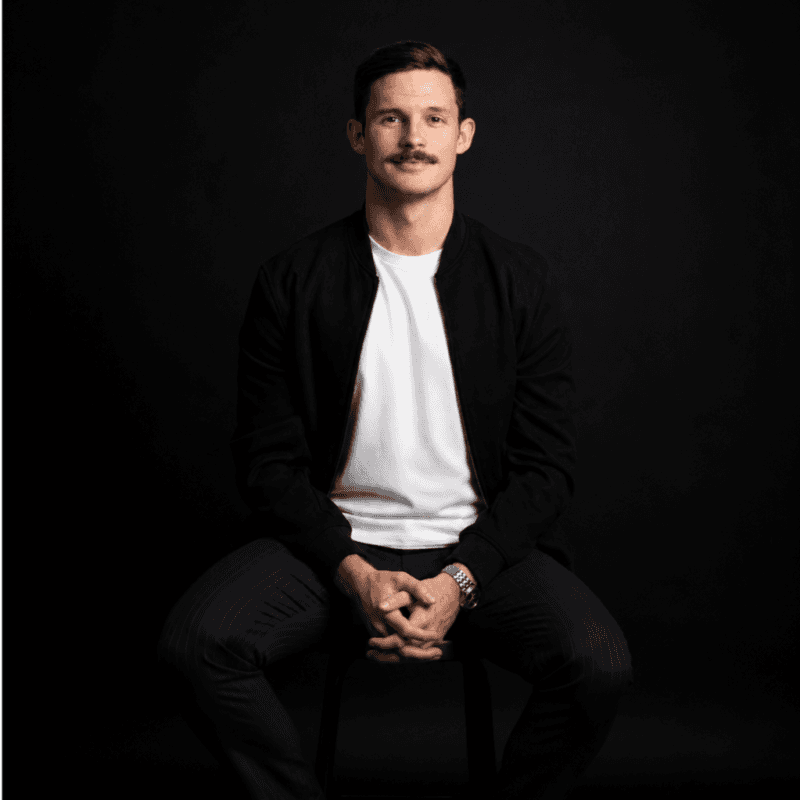
"What strikes me most about the signals in this issue is not that luxury hospitality is performing well. It is that the conditions producing that performance are structural enough to reward professionals who build towards them deliberately, rather than those who simply happen to be in the right place. The scarcity story is real, but scarcity alone does not create career advantage. What creates career advantage is being the person who understands what a constrained supply environment demands from operators, and who has built the credentials to meet that demand before the market asks for them. If this issue prompts you to think more carefully about what you are accumulating, professionally, and where you are accumulating it, then it has done its work."
BEGIN ONBOARDING
Book your calibration call